Educational institutions need to embrace technology to improve efficiency and optimize their operations. A noteworthy advancement in this area is the School ERP (Enterprise Resource Planning) system, which simplifies numerous administrative tasks, enhances communication and offers access to real-time data. But what are the true advantages of adopting such a system? This article delves into seven key benefits of implementing a School ERP system for schools, administrators, and government organizations.
What is a School ERP?
A School ERP is an integrated software solution designed to manage administrative, academic, and financial activities within an educational institution. It includes various modules such as attendance tracking, fee management, student enrollment, timetable scheduling, and communication tools, ensuring smooth school operations.
7 Key Benefits of a School ERP
1. Improved Efficiency in Administration
- Automates tasks such as admissions, fee collection, and attendance tracking.
- Reduces paperwork, making school operations eco-friendly and cost-effective.
- Minimizes errors in data management and record-keeping.
2. Enhanced Communication Between Stakeholders
- Provides a centralized communication system for parents, teachers, and students.
- Sends automated alerts for attendance, report cards, and fee payments.
- Allows real-time interaction through mobile apps and web portals.
3. Streamlined Academic Management
- Automates timetable scheduling and exam management.
- Provides a digital grade book for teachers to update student performance.
- Offers personalized learning experiences through student progress tracking.
4. Financial Transparency and Security
- Ensures secure online fee payment gateways.
- Provides real-time financial reporting and audit trails.
- Reduces the risk of fraud and unauthorized transactions.
5. Improved Student Performance Tracking
- Tracks individual student progress through analytics and reports.
- Identifies areas for improvement with AI-driven insights.
- Helps teachers tailor their teaching methodologies based on data-driven results.
6. Data-Driven Decision Making
- Generates customized reports for school administrators.
- Uses AI and analytics to forecast trends and improve learning outcomes.
- Enhances strategic planning for resource allocation and academic performance.
7. Integration with Government and Compliance Standards
- Ensures schools adhere to government regulations and compliance norms.
- Facilitates easy data sharing with educational authorities.
- Enhances digital transformation in education policies.
How News Events in a School ERP Benefit Institutions
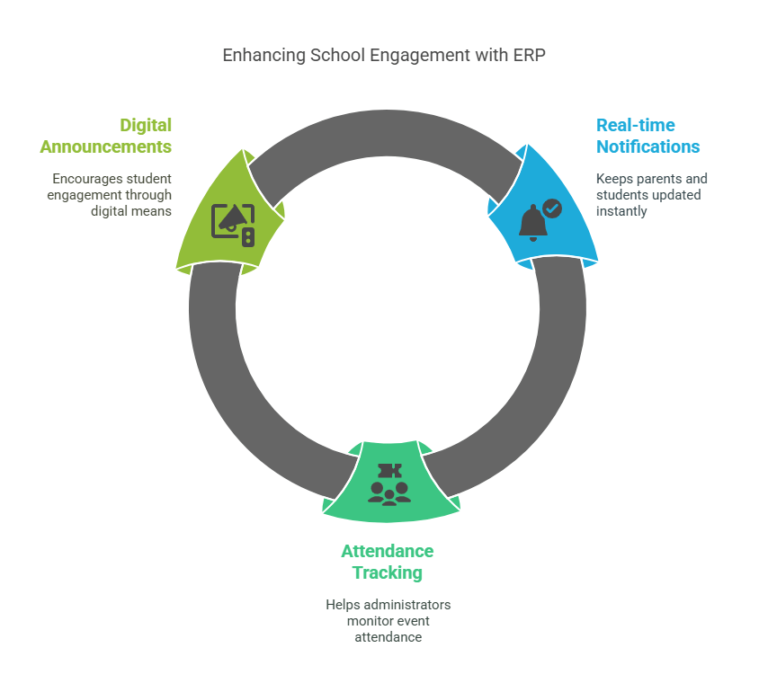
- Keeps parents and students updated with real-time event notifications.
- Helps administrators track attendance at school functions.
- Encourages student participation through engaging digital announcements.
Benefits of a School ERP for School Directors
- Provides an overview of institutional performance at a glance.
- Automates teacher and staff payroll management.
- Helps in strategic decision-making with real-time data analytics.
Government Advantages of a School ERP
- Helps governments monitor school operations remotely.
- Standardizes educational data across multiple institutions.
- Improves transparency in fund allocations and academic results.
How to Choose the Right School ERP for Your Institution

- Evaluate features and scalability.
- Check for data security and cloud integration.
- Consider vendor support and customization options.
Case Studies of School ERP Implementation
- Increased student attendance tracking efficiency by 40%.
- Reduced manual paperwork by 70% through automation.
- PQR Private Academy: Enhanced financial transparency with integrated fee management.
Challenges and Solutions in School ERP Adoption
| Challenge | Solution |
|---|---|
| Resistance to Change | Provide training and onboarding support |
| High Implementation Costs | Choose cloud-based, subscription models |
| Data Security Concerns | Opt for end-to-end encryption and compliance certifications |
FAQs
Conclusion
A School ERP system is an invaluable tool for modern educational institutions, offering benefits that extend beyond administrative efficiency. From enhancing communication to ensuring government compliance, the advantages of implementing a robust School ERP are endless. Schools that embrace this technology today are setting the foundation for a smarter, more connected future.